
Feb 10, 2026
ICE plans to lease offices throughout the US as part of a secret, monthslong expansion campaign. WIRED is publishing dozens of these locations.
Federal records obtained by WIRED show that over the past several months, Immigration and Customs Enforcement (ICE) and the Department of Homeland Security (DHS) have carried out a secret campaign to expand ICE’s physical presence across the US. Documents show that more than 150 leases and office expansions have or would place new facilities in nearly every state, many of them in or just outside of the country’s largest metropolitan areas.
In New York, ICE is moving into offices on Long Island near a passport center.
The General Services Administration (GSA), which manages federal buildings and functions as the government’s internal IT department, is playing a critical role in this aggressive expansion. In numerous emails and memorandums viewed by WIRED, DHS asked GSA explicitly to disregard usual government lease procurement procedures and even hide lease listings due to “national security concerns” in an effort to support ICE’s immigration enforcement activities across the US.
Since President Donald Trump took office in 2025, ICE has more than doubled in size. DHS claims the agency now has 22,000 officers and agents stationed around the country and is still in the process of hiring more. The agency received nearly $80 billion in funding as part of Trump’s One Big Beautiful Bill Act, giving it virtually unlimited resources to combat what the administration has consistently portrayed as an “invasion.” With new employees comes a desperate need for office space, and the possibility of deployment to new areas of operation.
In September, as NPR and The Washington Post reported, a number of GSA employees were added to an “ICE surge” team responsible for finding new office locations and expanding preexisting offices for ICE employees. More specifically, according to documents viewed by WIRED, workers at the Public Buildings Service (PBS), the department within GSA that handles government buildings and leases, were assigned to actively support ICE’s physical expansion and told to find leasing spaces for ICE’s Enforcement and Removal Operations (ERO) and Office of the Principal Legal Advisor (OPLA) divisions across the country. ERO is tasked with immigration enforcement, including the arrest, detention, and removal of immigrants, and previously operated out of only 25 field offices in the US; OPLA is the legal arm of ICE, and lawyers with OPLA litigate “all removal cases including those against criminal aliens, terrorists, and human rights abusers,” for DHS, according to ICE’s website.
Records reviewed by WIRED show that the ICE surge team has successfully found spaces for ICE across the country. In addition to expanding previously held ICE offices, it has moved or is moving ICE into new buildings, or into space the government controlled under the terms of existing leases, in almost every US state and major city.
Starting in September, GSA was pushed to bypass the Competition in Contracting Act (CICA) that requires open competition among bidders for federal building and lease procurements, because ICE requested that leases fall under the “unusual or compelling urgency” government statute. The statute states that the procuring agency’s “need for the supplies or services is of such an unusual and compelling urgency that the Government would be seriously injured unless the agency is permitted to limit the number of sources from which it solicits bids or proposals, full and open competition need not be provided for.”
A training kickoff for PBS staff assigned to the ICE surge team the same month cited the “Big Beautiful Bill” and the aim of hiring 13,000 new ICE employees, as the “trigger event” for the new team. These team members were told that around 250 new locations were needed for ICE employees, and this would be potentially achieved by new lease acquisitions and by locating ICE in existing federal spaces. The “primary focus is securing a space. Renovations are secondary,” shows documentation viewed by WIRED. Employees were instructed to move as quickly as possible, without getting “hung up” on issues like “needing paint and carpet before occupancy.”
In a memorandum dated September 10, 2025, an OPLA representative asked GSA’s office of general counsel to look past the usual leasing procedures with the “unusual and compelling urgency justification,” in accordance with Trump’s executive order on immigration. “In the next three months, OPLA will grow to more than 3,500 attorneys and 1,000 support staff,” the memorandum states. “OPLA has critical space needs that require the ability to identify office locations nationwide that OPLA can readily occupy as soon as possible.”
GSA’s ICE surge team began visiting potential leasing locations and worked to finalize deals within days. A DHS official sent GSA an email on September 24, 2025, asking that the agency not publicize leasing information, recognizing that this request was outside of the “normal” process. “Due to national security concerns and recent attacks against ICE, publicizing new lease locations puts our officers, employees, and detainees in grave danger,” the email stated.
GSA was instructed in January 2025 to pause most acquisitions, deliveries, and modifications, except for projects under $50,000 and those related to supporting security measures for the president’s office. But on September 25, 2025, a GSA commissioner emailed other leaders at the agency that “an exception to the acquisition pause has been approved for all actions supporting the ICE hiring surge, regardless of dollar value.”
By September 29, GSA had already awarded leasing projects, and the ERO division at ICE had sent the ICE surge team a list of requirements for specific leasing locations, including sally ports—a secure entryway system with interlocking doors used by military troops, prisons, and police stations—and other security measures. ICE also came to GSA with a specific request: that any new location be within a 10-mile radius of an existing ERO facility.
By early October, the ICE surge team was working through the government shutdown, even as other critical government work was put on hold. Days after the shutdown began, GSA was still awarding leases. On October 6, 2025, a signed internal memorandum stated that GSA should “approve of all new lease housing determinations associated with ICE hiring surge,” in light of ICE’s “urgent” space requirements and the purported impact of delays on the agency’s ability to “meet critical immigration enforcement deadlines.”
On October 9, the same day that Trump announced in a cabinet meeting that the government would be making “permanent” cuts from “Democrat programs” during the shutdown, GSA received a list from OPLA with requests for office locations, including expansions and new leases, in 41 cities around the country.
In a memorandum dated October 29, 2025, a representative from Homeland Security Investigations—one of the two major departments within ICE, along with ERO, and tasked with a wide range of investigative work in cases ranging from human trafficking to art theft—asked GSA’s office of general counsel to engage in nationwide lease acquisition on behalf of DHS “using the unusual and compelling urgency justification,” in accordance with Trump’s executive immigration order.
“If HSI cannot effectively obtain office space in a timely manner, HSI will be adversely impacted in accomplishing its mission—a mission that is inextricably tied to the Administration’s priority in protecting the American People Against Invasion,” the memorandum states.
By early November, according to documents viewed by WIRED, 19 projects had been awarded in cities around the US, including Nashville, Tennessee; Dallas, Texas; Sacramento, California; and Tampa, Florida. Multiple projects were days away from being awarded in Miami, Florida; Pittsburgh, Pennsylvania; and New Orleans, Louisiana, among others, and emergency requests for short-term space had been made in eight cities, including Atlanta, Georgia; Baltimore, Maryland; Boston, Massachusetts; and Newark, New Jersey.
In documents viewed by WIRED, ICE has repeatedly outlined its expansion to cities around the US. The September memorandum citing “unusual and compelling urgency” for office expansion states that OPLA will be “expanding its legal operations” into Birmingham, Alabama; Fort Lauderdale, Fort Myers, Jacksonville, and Tampa, Florida; Des Moines, Iowa; Boise, Idaho; Louisville, Kentucky; Baton Rouge, Louisiana; Grand Rapids, Michigan; St. Louis, Missouri; Raleigh, North Carolina; Long Island, New York; Columbus, Ohio; Oklahoma City, Oklahoma; Pittsburgh, Pennsylvania; Charleston and Columbia, South Carolina; Nashville, Tennessee; Richmond, Virginia; Spokane, Washington and Coeur d’Alene, Idaho; and Milwaukee, Wisconsin. The memorandum also states that the existing offices are at maximum capacity and will “require additional space” to accommodate the new employees hired. At the time, the memo states that OPLA had selected almost 1,000 attorneys to hire.
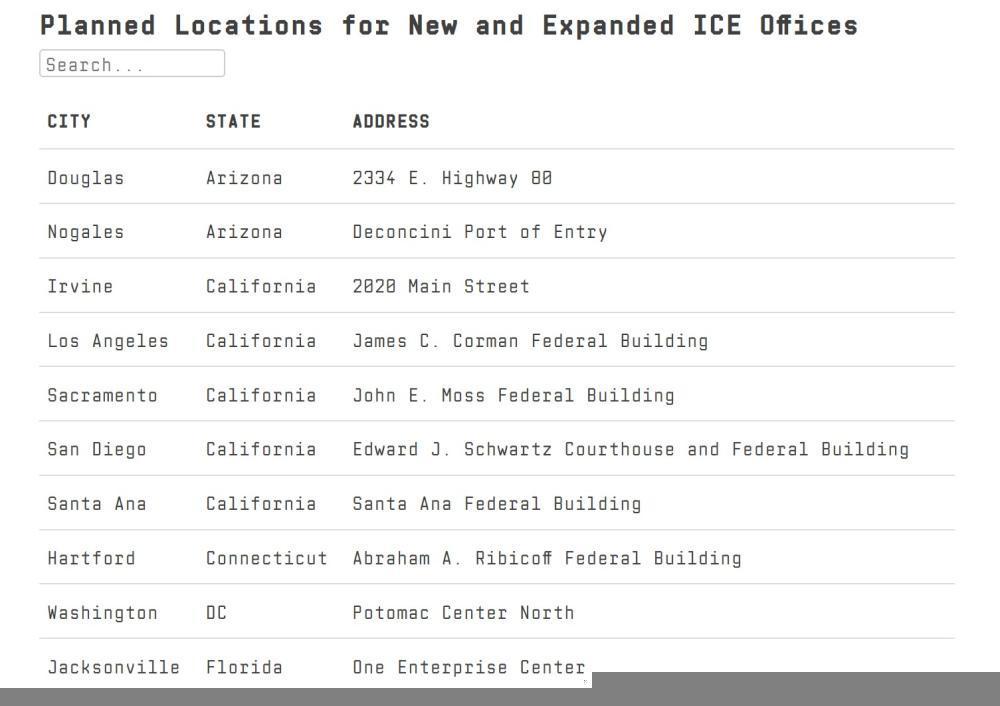
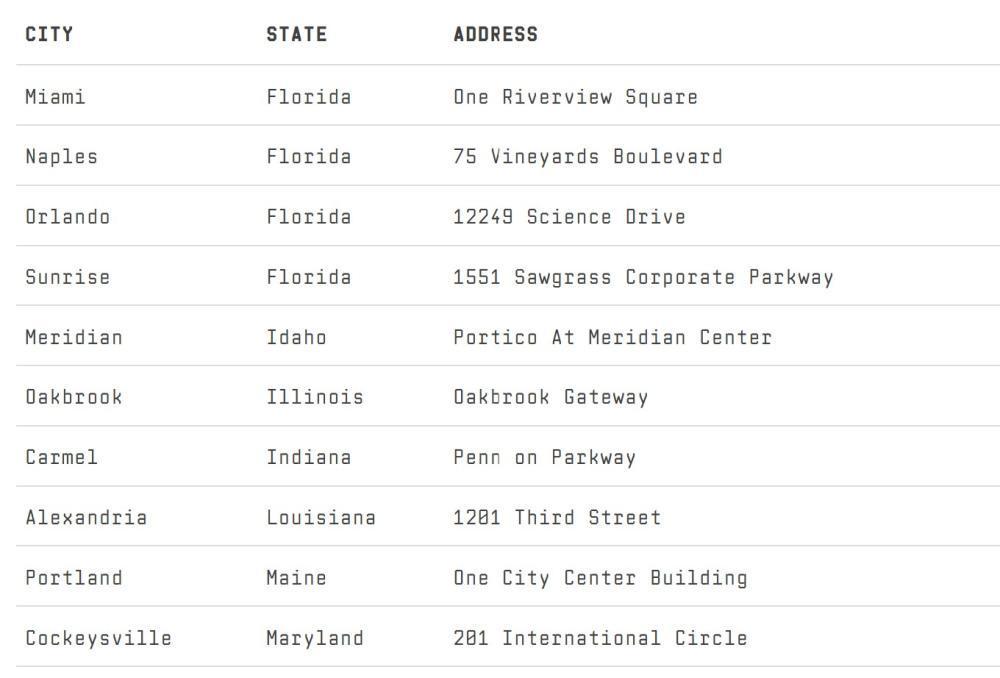
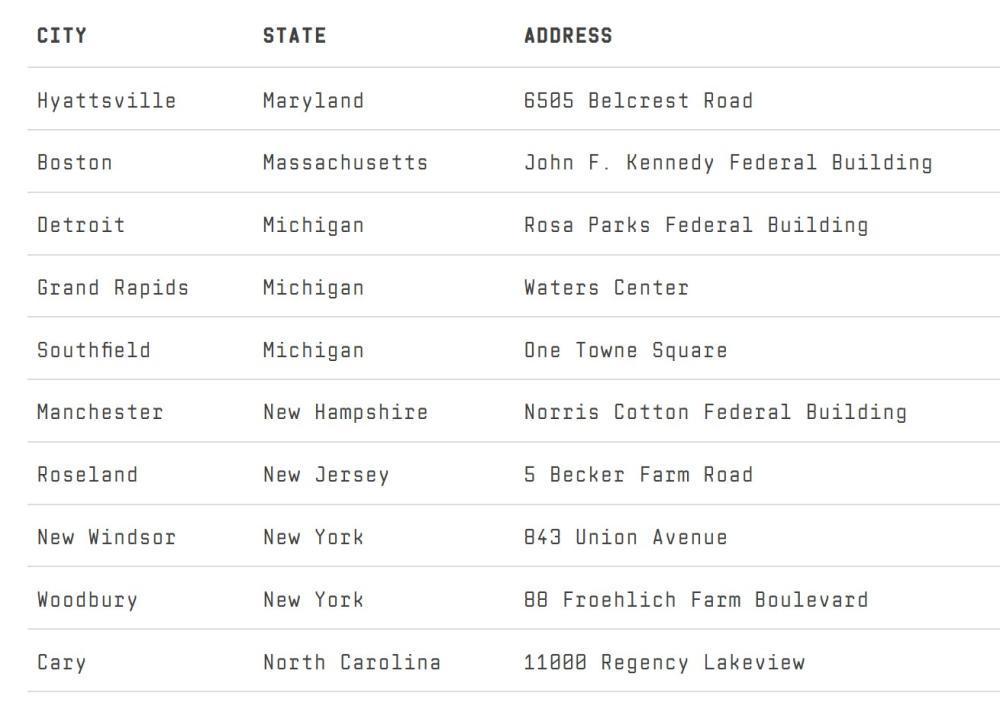
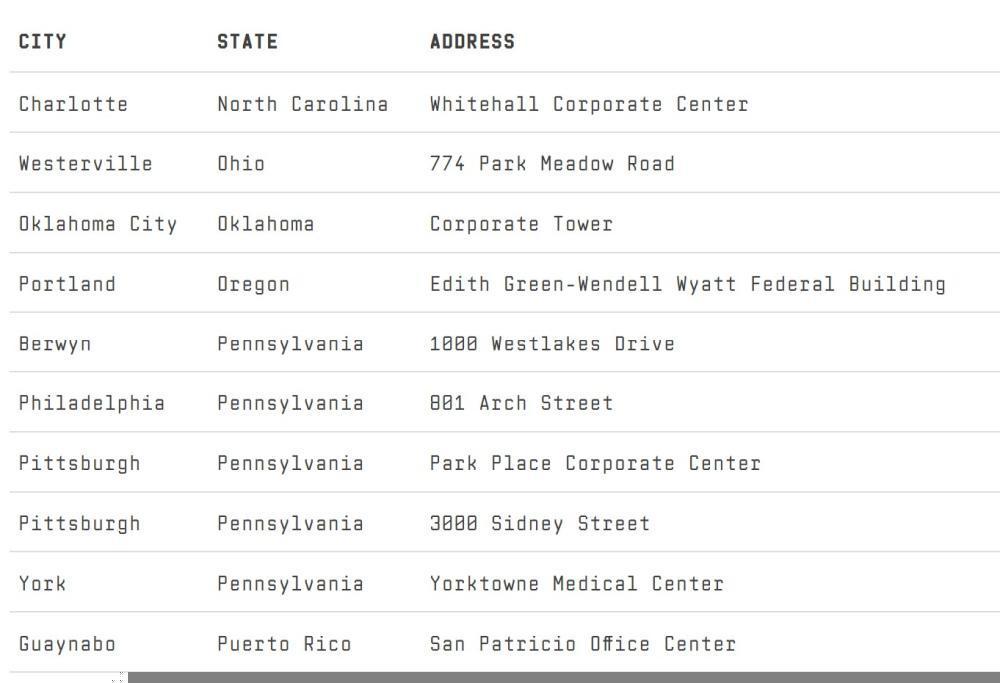
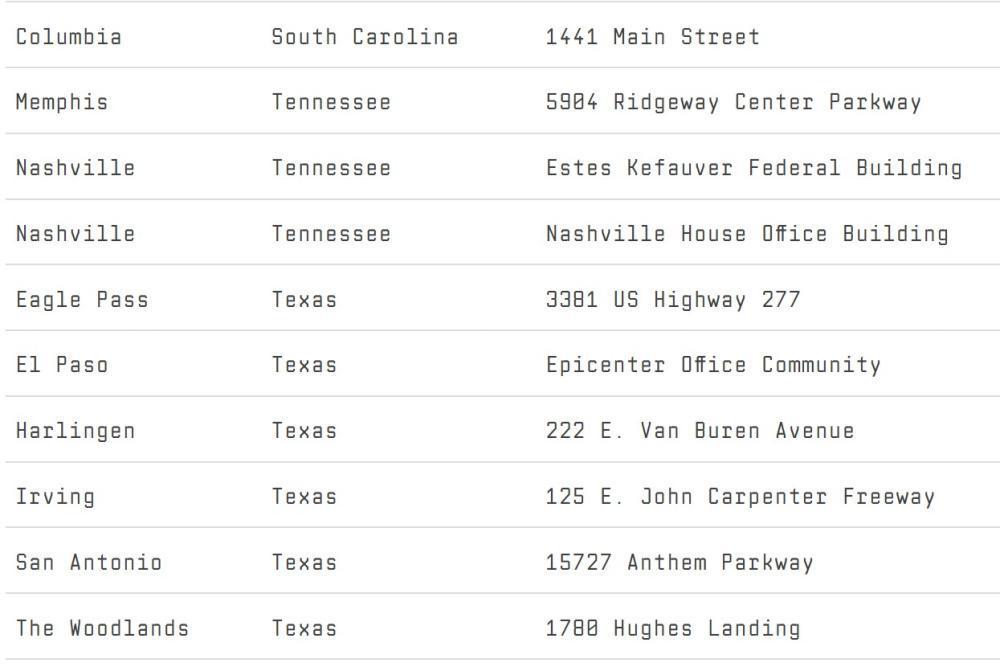
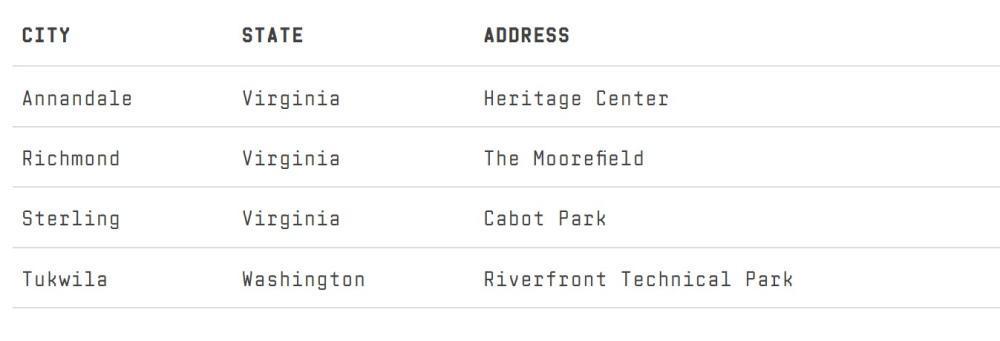
Months after the “surge” began, ICE’s expansion to American cities is well underway, according to documentation viewed by WIRED. The table below gives a detailed listing of planned ICE lease locations as of January, and includes current ICE offices that are set to expand and new spaces the agency is poised to occupy. It does not include more than 100 planned ICE locations across many states—including California, New York, and New Jersey—where WIRED has not viewed every specific address.
A Trump administration official recently told WIRED that California and New York are “next” for the type of fraud investigation that culminated in 3,000 ICE agents in Minneapolis.
In New York and New Jersey, ICE is expanding its physical footprint rapidly. In Roseland, New Jersey, less than an hour’s drive from New York City, ICE is moving into a building at 5 Becker Farm Road. The building is located near the Roseland Child Development Center. In Woodbury, New York, a hamlet in Long Island, ICE is moving into offices located at 88 Froehlich Farm Boulevard, near an expedited passport center. In New Windsor, New York, a town within driving distance of New York City along the Hudson River known for the Storm King Art Center, ICE is moving into offices at 843 Union Avenue. All three of these locations are within an hour and a half from a warehouse [at 29 Elizabeth Drive] in Chester, New York, that DHS is pursuing as an immigrant detention center.
Together, the leasing plans give a clear picture of where ICE is going next in the US: Everywhere.
Source: https://www.wired.com/story/ice-expansion-across-us-at-heres-where-its-going-next | https://es.wired.com/articulos/el-ice-se-expande-como-un-rayo-en-ee-uu-con-una-opaca-red-de-nuevas-oficinas